According to the biblical gospel, there is just one oppressed figure — and He is Jesus Christ. All others are the oppressors. They — everyone else, including you and me — oppressed Him. We are guilty! Although we deserve unmitigated punishment for our sins, the biblical gospel makes it possible for us to become right with God because of Jesus’ redemptive work on the cross. How different this is from the “gospel” of social justice!
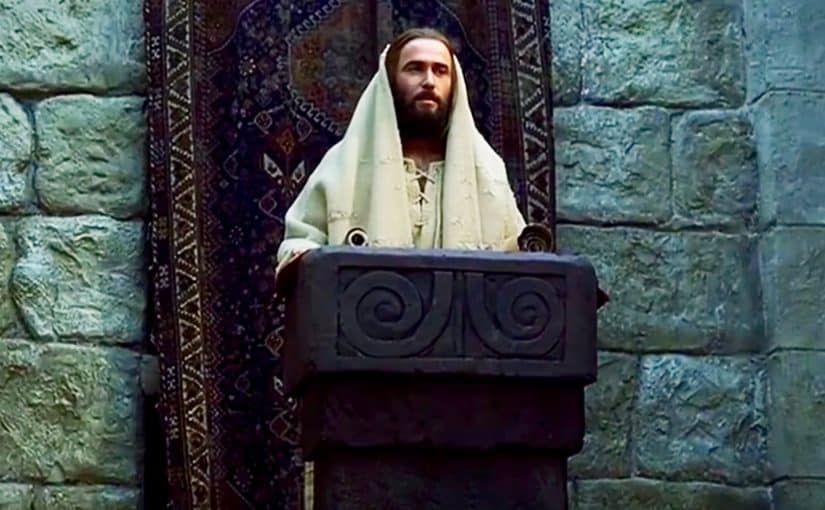
Yet we need to offer this clarification. When we say Jesus is the only one oppressed, we mean “oppressed in the ultimate sense.” While Jesus is unique in this regard, a statement He made near the beginning of His ministry may raise questions. Luke 4:16-22 tells us that after publicly reading Isaiah 61:1 and a portion of verse 2 at the synagogue in Nazareth, Jesus declared, “Today this Scripture is fulfilled in your hearing.” As reported by Luke, the portion of Isaiah Jesus read is as follows,
The Spirit of the Lord is upon Me,
Because He has anointed Me
To preach the gospel to the poor;
He has sent Me to heal the brokenhearted,
To proclaim liberty to the captives
And recovery of sight to the blind,
To set at liberty those who are oppressed;
To proclaim the acceptable year of the Lord.
When Jesus spoke of setting “at liberty those who are oppressed,” He clearly didn’t use the term translated oppressed to convey the idea of being oppressed in the same way He Himself would be oppressed by sin; nor did He mean oppressed in the sense in which the social justice narrative speaks of being oppressed. In fact, the translators of the King James Version translated the phrase rendered “those who are oppressed” in the New King James Version (NKJV) as “them that are bruised” in their translation.
To understand this even better, we must look at the larger picture of Jesus’ ministry and God’s instructions to Israel regarding the Year of Jubilee in the Old Testament. Bible scholar Warren Wiersbe writes,
A typical synagogue service opened with an invocation for God’s blessing and then the recitation of the traditional Hebrew confession of faith (Deut. 6:4-9; 11:13-21). This was followed by prayer and the prescribed readings form the Law and from the Prophets, with the reader paraphrasing the Hebrew Scriptures in Aramaic.
This was followed by a brief sermon given by one of the men of the congregation or perhaps by a visiting rabbi (see Acts 13:14-16). If a priest was present, the service closed with a benediction. Otherwise, one of the laymen prayed and the meeting was dismissed.
Jesus was asked to read the Scripture text and to give the sermon. The passage He read included Isaiah 61:1-2, and He selected it for his “text.” The Jewish rabbis interpreted this passage to refer to the Messiah, and the people in the synagogue knew it. You can imagine how shocked they were when Jesus boldly said it was written about Him and that He had come to usher in the “acceptable year of the Lord.”
The reference here is the “Year of Jubilee” described in Leviticus 25. Every seventh year was a “Sabbatical year” for the nation, when the land was allowed to rest; and every fiftieth year (after seven Sabbaticals) was set apart as the “Year of Jubilee.” The main purpose of this special year was the balancing of the economic system: slaves were set free and returned to their families, property that was sold reverted to the original owners, and all debts were canceled. The land lay fallow as man and beast rested and rejoiced in the Lord. [In Social Justice: How Good Intentions Undermine Justice and Gospel (pages 4-6) Dr. Calvin Beisner explains why the sabbatical year and the Year of Jubilee should not be used to advance any part of the social justice narrative.]
Jesus applied all of this [that He had read from Isaiah 61:1-2] to His own ministry, not in a political or economic sense [emphasis added], but in a physical and spiritual sense. He had certainly brought Good News of salvation to bankrupt sinners and healing to brokenhearted and rejected people. He had delivered many from blindness and from bondage to demons and disease. Indeed It was a spiritual “Year of Jubilee” for the nation of Israel.
The problem was that His listeners would not believe in Him.1
Noted Bible scholar William Hendriksen says this:
The underlying figure is the year of Jubilee, the fiftieth year, when, according to Lev. 25:8 f., the trumpet must be sounded, and “liberty through the all the land” must be proclaimed. This is a symbol of the Messianic Age, for it is only by faith in Jesus Christ that true freedom is obtained….
If we bear in mind that when this Scripture passage was being read Jesus had already carried on an extensive ministry both in Judea and in Galilee, it becomes clear that to a considerable extent the mission here described had been performed. It was still being fulfilled and was going to be, until it had been accomplished. The poor received, are receiving, are going to receive good news (Luke 6:20; 12:32); captives (to sin and Satan), release (Luke 13:16; John 8:31 f.); the blind, recovery of sight (Luke 7:21,22); the oppressed, freedom (Matt. 11:28 f.; John 7:37); while for all true believers “the acceptable year of the Lord” arrives (Luke 7:22; 10:24). In fact, to a certain degree even unbelievers are benefitted by its arrival (Luke 17:17).
Notes:
1Warren Wiersbe, The Bible Exposition Commentary, New Testament, Volume 1: Matthew – Galatians (Wheaton, IL: Victor Books, 1989), 184.
2William Hendriksen, New Testament Commentary: The Gospel of Luke (Grand Rapids: Baker Book House, 1978), 254.
Copyright © 2023. All rights reserved.
top image credit: Jesus Film