“It is a good thing to give thanks unto the Lord.”
More than three centuries ago, the Pilgrims, after a year of hardship and peril, humbly and reverently set aside a special day upon which to give thanks to God for their preservation and for the good harvest from the virgin soil upon which they had labored. Grave and unknown dangers remained. Yet by their faith and by their toil they had survived the rigors of the harsh New England winter. Hence they paused in their labors to give thanks for the blessings that had been bestowed upon them by Divine Providence.
—President John F. Kennedy, in his Thanksgiving Day Proclamation issued October 27, 1961—
In his Thanksgiving Day Proclamation issued on Monday, September 27, 1982, President Ronald Reagan declared “Thursday, November 25, 1982, as a National Day of Thanksgiving” and called “upon all of our citizens to set aside that day for appropriate expressions of” gratitude “for America’s bounty and heritage.”
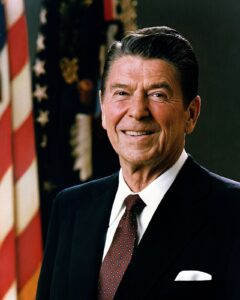
The declaration reads, in part,
Today we have more to be thankful for than our pilgrim mothers and fathers who huddled on the edge of the New World that first Thanksgiving Day could ever dream. We should be grateful not only for our blessings, but for the courage and strength of our ancestors which enable us to enjoy the lives we do today.

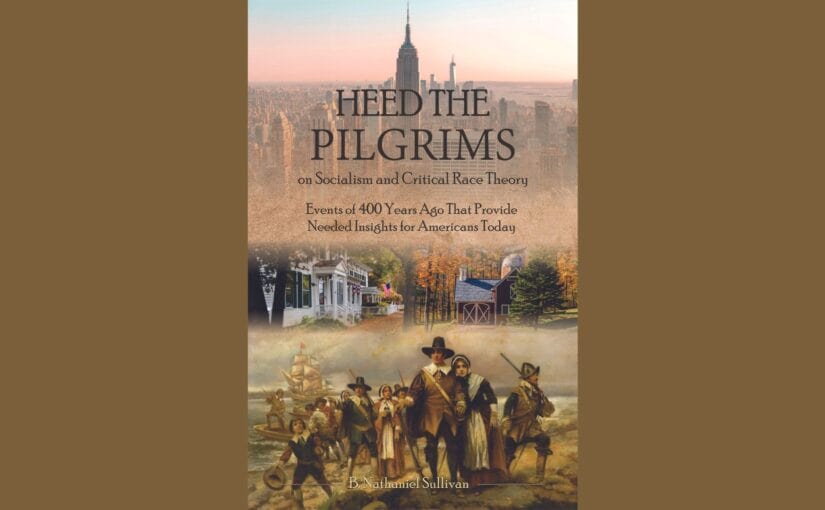
The book you hold in your hands is a call to Heed the Pilgrims on some extremely important issues being discussed in our day. Here, at the outset, it’s important to understand that this call rests in large part upon what history reveals to us about the Pilgrims’ “courage and strength,” two intangible and qualities that, as President Reagan rightly affirmed, “enable us to enjoy the lives we do today.”
Chapter 1 of Heed the Pilgrims explores the Plymouth settlers’ two-year experiment in socialism. It highlights the jealousy, frustration, ill will, envy, and greed it bred among the colonists. We are fortunate that they had and exercised the “courage and strength” to reject the communal approach and to adopt a free market system that at last set the stage for the settlement to prosper. Their journey was fraught with hardships, including poverty, relational tension, and resentment. Still, as William Bradford indicated in his journal, socialism didn’t work because it doesn’t work. It cannot work because is inherently flawed. Speaking of the members of the colony in the third person, Governor Bradford put it this way:
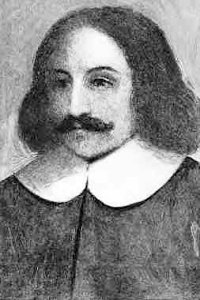
Let none argue that this [complete failure of the communal system to work] is due to human failing, rather than to this communistic plan of life in itself.…God in His wisdom saw that another plan of life was fitter for them.
If you are having difficulty understanding Bradford’s words, don’t worry; chapter 1 paraphrases Bradford’s account of the difficult journey, the detour he and his fellow Pilgrims took, and the ultimately satisfying place to which they courageously traveled. The alternative “plan of life [that] was fitter for them” upheld property rights and offered natural incentives to work hard and shun laziness.
There’s more! Heed the Pilgrims explores yet another aspect of the Plymouth settlers’ strength and courage — that of the friendships they forged with the Native Americans living nearby. They even welcomed one of them in particular, Squanto, into their own community.
Chapters 2 and 3 of Heed the Pilgrims examines these actions on the part of the Plymouth settlers, as well as the attitudes that undergirded them. Today, the increasingly prevailing cultural narrative claims that Thanksgiving is nothing to be celebrated because it commemorates an invasion of white Europeans onto North American soil — soil that should never have been tainted by their footprints. Yet, the events that actually occurred at and around the Plymouth settlement during its early years tell a very different story. Do we see evidence of an air of superiority among the Pilgrims in their dealings with their Native Americans counterparts? If not, why not? Significantly, part of the answer lies in the Pilgrims’ “strength and courage,” the same qualities Ronald Reagan’s proclamation in 1982 commended and praised. This was not a combination of “strength and courage” flowing from raw power, but one inseparably tied to faith in the God of the Bible and a conviction that the Lord made every person, whatever his or her race, in His image. The Pilgrims’ gratitude to God for His blessings also significantly influenced and guided these newcomers to North America in their dealings with the Indians.
From the historical events that occurred in Plymouth’s early years, what lessons arise that Americans urgently need to heed today? In Heed the Pilgrims, you will discover that an accurate presentation of history could not be more practical, relevant, or instructive — even 400 years after the events occurred.
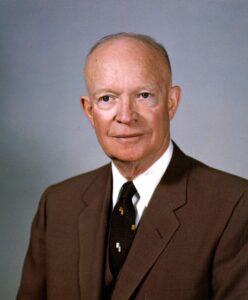
In 1954, twenty-eight years prior to Ronald Regan’s placing his signature on his Thanksgiving Day Proclamation of 1982, President Dwight D. Eisenhower issued a Thanksgiving Day Proclamation that affirmed, in part,
Early in our history the Pilgrim fathers inaugurated the custom of dedicating one day at harvest time to rendering thanks to Almighty God for the bounties of the soil and for His mercies throughout the year. At this autumnal season tradition suggests and our hearts require that we follow that hallowed custom and bow in reverent thanks for the blessings bestowed upon us individually and as a Nation.…
Eisenhower went on to offer this powerful charge to his fellow Americans:
With gratitude in our hearts for all our blessings, may we be ever mindful of the obligations inherent in our strength, and may we rededicate ourselves to unselfish striving for the common betterment of mankind.
It is with this exhortation in mind that I encourage you to join me. Let’s embark together on an all-important quest to discover why and how we, as 21st-century Americans today, must Heed the Pilgrims on Socialism and Critical Race Theory.
Learning what both history and the Scriptures teach us as we explore them together, may we “be ever mindful of the obligations inherent in our” understanding, and may we resolve lovingly to present the truth about what we discover to our friends, family members, neighbors, and acquaintances. Again, in the words of President Eisenhower, “may we rededicate ourselves to unselfish striving for the common betterment of mankind.”
That’s what the Pilgrims did for us. Let’s follow their example!
Yet we cannot effectively follow it until we fully understand the important decision they were compelled to make in 1623.…