BACKUP
It is a grievous thing that the Gospel of the Bible has been shrunken down into a man- sized pine box prepared for burial. It seems as though the whole evangelical world thinks the Gospel is the simple message of salvation and the only purpose of the church is to get lost men saved, etc. This is only a fraction of the truth. The Gospel is not just a tiny message to get humans ready for their coming death. Our churches are not ‘just here to get people saved.1
—Pastor Cary Gordon—
Exposing Enemies Within the Church: A Bible Study Series Based on the Film Enemies Within the Church — Home Page
Last time, in session 6, we talked about two core differences between the social justice “gospel” and the authentic gospel of Christ. According to the social justice movement’s critical theory (CT), people fall into one of two groups — oppressors or oppressed. However, they stereotype and pigeon-hole people based, not on authentic criteria, but on external qualities that have nothing to do with oppressing people or being oppressed.
-
-
- Strictly speaking, you’re not a member of the oppressor group if you actively oppress others, but if you have innate traits that advocates of critical theory say are typically associated with those who are oppressors.
- Similarly, you’re not considered a member of a group of oppressed people based on whether or not you’ve actually been oppressed or mistreated, but based on traits like skin color, sex, gender identity, sexual orientation, religion, and economic status. You might never actually have been oppressed, but if you’re, say, a black woman, you are oppressed, simply because you’re a black woman.
-
In his “I Have a Dream” speech, Dr. Martin Luther King spoke of his desire that “my four little children would one day live in a nation where they will not be judged by the color of their skin but by the content of their character.” We should “[n]ote that Dr. King did not ask that he or his children not be judged at all. Instead, he invited Americans to judge his children ‘by the content of their character.’”
The social justice movement has turned its back on this idea, a noble idea Dr. King eloquently upheld in his speech. According to critical theory, white people are oppressors, and minorities, especially blacks, are victims — period. Whites, CT says, are oppressors because “the system” favors them and puts them in positions of authority. Blacks, according to CT, have moral authority because “the system,” which is and has been operated by whites, is aligned against them.
From the perspectives of social justice crusaders, the social justice narrative is all that matters. CT and its advocates are blind to the remarkable progress that has occurred in America in race relations over the last half-century. Moreover, they offer no evidence for their contentions that whites are oppressors and blacks are oppressed because of a rigged system. They claim they wish to right the wrongs of the past — wrongs that, in a great many cases, occurred in the distant past, before America’s current population was even born; yet their recommendations reveal their true goal: Igniting intense upheaval that will set the stage for implementation of Marxist and socialist policies.
A Biblical Perspective
As we explored in our last session, the biblical gospel presents an entirely different message. Who is oppressed? Just one — Jesus. Only He has been truly oppressed, and everyone is guilty of oppressing Him (see Ps. 14:2-3; Rom. 3:23). How? With our sins, for it was to pay the eternal penalty of our sins that He died. Being God, He Himself was without sin, so His death could count as payment of the the sin-debt sinners owed. When we come to Him on His conditions — repentance, faith in Christ and the sufficiency of His death to pay our penalty, and a recognition of Jesus as Savior and Lord, we are forgiven for our sins and are born into God’s family. Jesus is our High Priest, the mediator between us and God, and He prays for us, interceding for us before God.
Distribute this reading to each participant and ask for three volunteers. Perform the reading as a class as those who don’t have a speaking part follow along.
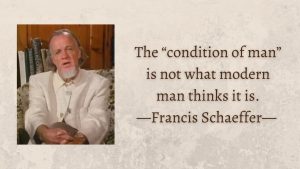
Discuss Francis Schaeffer’s observation. Why is modern man wrong about man’s — humanity’s — condition? Emphasize that when we get our premises, or initial assumptions, wrong, our conclusion will be wrong as well. What are some of modern man’s initial assumptions? Why is the biblical perspective on man’s condition so difficult for many to accept?
Bad News; Good News
Share these observations: The gospel is good news, but it is good news against the backdrop of bad news that’s just as bad as the good news is good. To understand why the good news is so good, we also must comprehend why the bad news is so bad.
When we consider who really is oppressed in the gospel narrative, we come to the proper bad news we must understand and emphasize. We are sinners, and on our own, we have no hope; we must face God’s judgment. We are guilty before a holy God! The gospel doesn’t carry the message that our primary need is salvation from our circumstances; rather, it boldly proclaims that our primary need is to be saved from the sins that we have committed against God — and against His Son, who willingly laid down His life for us.
The gospel doesn’t carry the message that our primary need is salvation from our circumstances; rather, it boldly proclaims that our primary need is to be saved from the sins that we have committed against God — and against His Son, who willingly laid down His life for us even though we’d oppressed Him and offended God in the most extreme ways.
We “oppressed” Him: “All we like sheep have gone astray; [w]e have turned, every one, to his own way; [a]nd the Lord has laid on Him the iniquity of us all” (see Isa. 53:3-7).
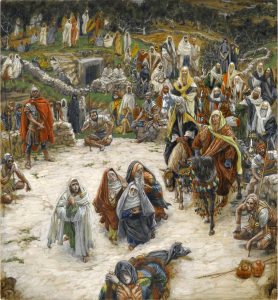
The good news of the gospel is that, even though we are helpless and hopeless by ourselves and can do nothing to improve our standing before God, Jesus offers us forgiveness and salvation. He, and He alone, is in a position to do this. Because Jesus already has been judged and punished for sins He didn’t commit and that we did, and because He offers us His payment for those sins on our behalf, when we come to Him, repent of our sins, and joyfully accept Him as our Lord and Savior, we are forgiven and receive His salvation. In other words, we are saved or rescued from God’s wrath.
Focusing on Forgiveness — Something the Social Justice Movement Gets Wrong
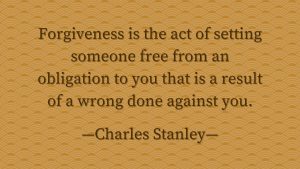
What is forgiveness? Pastor Charles Stanley states that
Forgiveness is “the act of setting someone free from an obligation to you that is a result of a wrong done against you.” For example, a debt is forgiven when you free your debtor of his obligation to pay you back what he owes you.
Forgiveness, then, involves three elements: injury, a debt resulting from the injury, and a cancellation of the debt.1
Discuss: What kind of debt do we, as sinners, owe God? On what basis does God offer to cancel our debt? (On the basis of Christ’s payment for our sins on the cross). What must we do to be forgiven? If we aren’t forgiven by God, what happens to us?
Elaborate: Forgiveness is of utmost importance to us as Christians, for if we did not receive divine forgiveness for our sins we would be condemned to hell for eternity. In other words, we would receive justice from God. Instead, having been forgiven, we didn’t receive justice, but God’s mercy and grace.
-
-
-
- Mercy means being spared something bad we do deserve.
- Grace means being given something wonderful we don’t deserve.
- Being forgiven by God means He’s given us both mercy and grace.
-
-
Forgiveness is so essential that, having been forgiven by God, we are compelled to forgive others. In fact, God commands us to forgive. Note what Jesus said in Matthew 6:14-15. Consider and discuss the parable of the unforgiving servant, which Jesus gave in response to Peter, recorded in Matthew 18:21-35.
21 Then Peter came to Him and said, “Lord, how often shall my brother sin against me, and I forgive him? Up to seven times?”
22 Jesus said to him, “I do not say to you, up to seven times, but up to seventy times seven.23 Therefore the kingdom of heaven is like a certain king who wanted to settle accounts with his servants. 24 And when he had begun to settle accounts, one was brought to him who owed him ten thousand talents. 25 But as he was not able to pay, his master commanded that he be sold, with his wife and children and all that he had, and that payment be made. 26 The servant therefore fell down before him, saying, ‘Master, have patience with me, and I will pay you all.’ 27 Then the master of that servant was moved with compassion, released him, and forgave him the debt.

28 “But that servant went out and found one of his fellow servants who owed him a hundred denarii; and he laid hands on him and took him by the throat, saying, ‘Pay me what you owe!’ 29 So his fellow servant fell down at his feet and begged him, saying, ‘Have patience with me, and I will pay you all.’ 30 And he would not, but went and threw him into prison till he should pay the debt. 31 So when his fellow servants saw what had been done, they were very grieved, and came and told their master all that had been done. 32 Then his master, after he had called him, said to him, ‘You wicked servant! I forgave you all that debt because you begged me. 33 Should you not also have had compassion on your fellow servant, just as I had pity on you?’ 34 And his master was angry, and delivered him to the torturers until he should pay all that was due to him.
35 “So My heavenly Father also will do to you if each of you, from his heart, does not forgive his brother his trespasses.”
For the Christian, Forgiving Isn’t Optional
Yet, having been forgiven by God such a great debt, the Christian is able to forgive others. Louis Zamperini did. A former American Olympic athlete, he served in World War 2 and became a prisoner at a Japanese prisoner-of-war camp. He was mistreated horribly by the Japanese, but the torture he endured under one man — Mutsuhiro Watanabe, whom the prisoners nicknamed “The Bird” — stands out. A fragment of that mistreatment is portrayed in the 2014 movie Unbroken. It tells Zamperini’s story up to the end of the War and is based on the book by the same title by Laura Hillenbrand. The movie Unbroken: Path to Redemption also is based on Hillenbrand’s book and tells Zamperini’s story from the end of the War forward. Here is a scene from Unbroken.
Later, after the War was over, Zamperini became a Christian. He forgave his Japanese captors for torturing him mercilessly. He’d heard The Bird had committed suicide, but later found out that wasn’t the case. Unable to meet with him, Zamperini wrote him a letter. Listen to an aging Louis Zamperini publicly read the letter he had written to The Bird years before. Here is a copy of the letter.
Observe: Jesus’ statement that God will not forgive those who do not forgive others should wrest our attention. However, as we already have indicated, the reverse side of this “coin” is that having been forgiven so great a debt, Christians can forgive others. God enables them to do this!
The Social Justice Narrative and Forgiveness
Contrast real forgiveness to the narrative of the social justice movement. Does critical theory and the oppressor-victim narrative encourage or discourage a person 1) who either has been wronged or 2) who believes he or she has been wronged to forgive? Explain your answer.
Expose the social justice narrative as contrary to Scripture: Through class warfare and the oppressor vs. oppressed narrative, the social justice movement sows seeds of unforgiveness, bitterness, and resentment. While the biblical gospel teaches that those who are forgiven must forgive, the social justice “gospel” sends those it deems to be victims on a quest for “equality.” It’s a mindset that says, Instead of forgiving you, I will work to get even. This is the war cry of social justice crusaders. It makes perfect sense in a world where revenge is the order of the day, but it is nowhere to be found in the gospel of Jesus Christ.
And what does the social justice movement offer those deemed to be oppressors? Not forgiveness, but perpetual guilt. “Oppressors” are told they must become woke and submit to the moral authority of the oppressed. This can’t be a recipe for reconciliation; in fact it has to be a game plan for social upheaval.
Let’s return to Matthew 18:21-35. This passage highlights an essential gospel principle—forgiveness. It’s should be obvious to genuine believers that that God has forgiven them of transgressions far more serious and offensive than anything another person could do to them. Remember, we have blood on our hands! Our sins nailed Jesus to the cross! Realizing this, we can reach but one conclusion about our responsibility to forgive others. Let me express it as a new Christian might: Because God has forgiven me so extravagantly, I can extravagantly forgive everyone who has wronged me. This is the natural “peace cry” of the gospel, but it is revolutionary — far more revolutionary than the war cry of the social justice warrior to get even. I forgive is a peace cry that conquers hearts and minds with mercy and grace. We need to understand that this cry aligns with the gospel. Beneath it are underpinnings that include
-
-
- a proper focus on the bad news (how great our debt is to God, against whom we have committed capital offenses), and
- a proper focus on the good news (how Christ paid the price of our sin by being executed on the cross in our place).
-
By insisting on retribution, the social justice movement fails to recognize the liberating power of forgiveness. We see this most clearly in the movement’s call for racial reparations. When an ideology insists on paybacks instead of forgiveness, it becomes abundantly clear that it has abandoned the message of the gospel — if it ever had recognized it in the first place. And remember this: Almost all, if not all, of the wrongs cited in defense of reparations were committed against people who no longer are alive, by people who also already have died.
Promoting and Living as Citizens of the Gospel of the Kingdom
Jesus gave us this promise in Matthew 24:14, that “this gospel of the kingdom will be preached in all the world as a witness to all the nations, and then the end will come.”
The gospel Jesus gave us to preach is “the gospel of the kingdom.” Perhaps the greatest hindrance in turning this nation and world around isn’t the social justice, as bad as that is, but the failure of Christians and Christian leaders to preach the authentic kingdom-gospel message.
In reality, the “gospel of the kingdom” is HUGE! It’s REAL! The King lived in eternity past but was born as a baby in Bethlehem. He left this earth 2000 years ago, and He is coming again! Repent before He returns! It will be too late when He arrives.
Until that day when Christ the King returns, we must not forget that Jesus instructed His disciples to pray, “Your will be done on earth as it is in heaven” (emphasis added).
Leader: Ask the following questions: What are we supposed to do about human governments while we await His coming? Do we just focus on saving souls or do we just focus on rebuilding society? Is there really an either/or dichotomy between these two extremes, or should we do both?
Jesus used legal and political terminology to communicate with His Jewish audience on a level they could understand. His use of the word translated “kingdom” was not accidental; the term had significant meaning to those whom Jesus taught and with whom He interacted. The concept of native-born citizenship was something they readily could understand since the Jews were generally disallowed many rights and privileges that were reserved for the Roman citizens who had conquered them. Jesus’ “gospel of the kingdom” was the good news that there was a glorious eternal kingdom that was far more important than both Rome and Israel.
Most importantly, there was a way for non-citizens of that unseen kingdom to become native-born citizens. Even though all mankind was born outside of this kingdom’s rights and privileges, individuals from “every nation, tribe, tongue, and people” (Rev. 14:6) could be “born again” into the status of native-born citizens, so to speak.
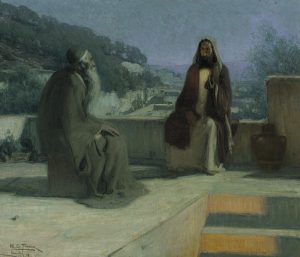
Thus, Jesus’ gospel of the kingdom came with an extremely important and unique port of entry — the new birth. Jesus told Nicodemus in John 3: “Most assuredly, I say to you, unless one is born again [the Greek word translated “again” also can be translated “from above] he cannot see the kingdom of God.” Nicodemus was confused. Jesus told him that he had to be born again before he could even see this powerful kingdom, much less enter it with all of its conferred rights and privileges.
Yes, Jesus certainly did say to Pilate, “My kingdom is not of this world. If My kingdom were of this world, My servants would fight, so that I should not be delivered to the Jews; but now My kingdom is not from here.” At the same time, as we already have mentioned, Jesus instructed His disciples to pray, “Your will be done on earth as it is in heaven” (emphasis added). Before this request in the Lord’s Model prayer came these: “Your kingdom come. Your will be done.” Thus, when we and our Christian brothers and sisters through the centuries have prayed the Model Prayer, we have petitioned God as follows:
Your kingdom come.
Your will be done
On earth as it is in heaven.
Christ’s kingdom is not a worldly kingdom, but it still is to influence the world and the kingdoms of the world, as long as its citizens dwell on earth! This is a big reason why it is important for believers to reject
-
-
-
- situationism,
- antinomianism,
- pietism,
- critical theory,
- and all the other tenets of the social justice movement.
-
-
Two Ditches to Avoid
As citizens of God’s kingdom who realize that
-
-
- God’s kingdom is ultimately a spiritual kingdom, the battles we fight are spiritual, and that Jesus has called us to preach the “gospel of the kingdom” and to “make disciples…teaching them to observe all things that I have commanded you, but also that
- spiritual warfare rages here on earth and we have a responsibility influence people and kingdoms on earth according to God’s will, which He has expressed in part through His moral commandments and laws,
-
we must recognize that we must stay “on track” and avoid two perilous ditches.
-
-
- On one hand, we as Christians must guard against becoming so political that we forget the importance of pointing lost individual souls to Christ and encouraging them to become believers. Making disciples necessarily includes winning people to Christ.
- On the other hand, we also must also must guard against a fear of being accused of being too political. Such a fear can keep us from influencing society, culture, and public policy even a little. When Jesus told His hearers they were salt and light, and when he said to them, “ Let your light so shine before men, that they may see your good works and glorify your Father in heaven,” He didn’t add, “By the way, what I’m saying here doesn’t apply to government and their leaders.” Without the influence of spiritual salt and light in the culture, a people can become callous toward “the gospel of the kingdom.”
-
Misinterpreting Scripture: Errors Lead to “Solutions” that Never Work
Social justice warriors preach a false gospel of race-based victimization and intersectionality, and they love to spring-board off the truths the Bible declares about God’s kingdom. They correctly point out, as we also have, that Jesus’ Model Prayer includes the petition, “Your will be done on earth as it is in heaven” Then they correctly will argue, again, as have we, that Jesus’ prayer and expectations for God’s will to impact this earth proves Jesus’ followers must engage in the political arena.
Here’s the problem. The “woke evangelists” fall into error by redefining Biblical justice so that instead of God’s will, they wind up promoting Marxism as a solution to the ills that the social justice movement says are of primary importance. Thus, they twist the kingdom realities of God’s Word into a justification for left-wing political and social activism, and they promote ideas and policies inconsistent with Christian orthodoxy. Marxism is unbiblical! In fact, it stands in opposition to everything Christian!
Listen to this clip from Enemies Within the Church. In it, Pastor Cary Gordon builds on an illustration he had presented earlier in the film. In the language of our illustration, we sense something is wrong, and we’re trying to put the pieces of the puzzle together to figure out what’s wrong and how to fix it. But someone has replaced our puzzle’s box top with another, and we can’t figure anything out!

Christians paralyzed by the heretical doctrine of pietism mistakenly believe that Christians and the Church are here only to win converts. Winning converts, by the way, is only a part of the disciple-making process, and Jesus commissioned His followers, not to win converts, but to make disciples. Those misled by pietism properly criticize social justice crusaders for left-wing (biblically unsupportable) views, yet they themselves enter into error by also criticizing the Biblical mandates for Christians to stay engaged in every realm, including that of public policy.
Romans 13:1-7 and 1 Peter 2:13-17 show clearly that government’s authority is delegated by God and can be abused. When this happens, Christians have a duty to work to hold government accountable. In other words, it is perfectly appropriate for believers and churches to insist that human governments properly respect and obey God’s moral law. To those misled by pietism we say, “Jesus did encourage His followers to pray, “Your will be done on earth as it is in heaven,” not merely, “May Your will be accomplished in heaven and eternity.”
Don’t be fooled.
-
-
-
- Woke evangelists are aggressively engaged in political battles, but sadly, they are promoting unbiblical, Marxist ideas. Some realize this; others do not. Also, by recasting justice as government-manipulated equality and by promoting the notion that social justice reform, or “restoration” is a part of the gospel, social justice crusaders in the church advance heretical, race-based ideas that are contrary to Scripture and can that be construed to support a works-based salvation.
- Adherents of pietism, on the other hand, often are faithful to the Scriptures with regard to salvation by grace through faith and not of works, but they are strangely paralyzed by their errant teaching that encourages Christians to abdicate their kingdom obligations to be salt and light in the political and legal realms, as ambassadors and citizens of God’s kingdom. There is no realm on earth in which God does not want the light of His kingdom to shine. Wherever believers do not shine it, those areas will remain dark.
-
-
There is no realm on earth in which God does not want the light of His kingdom to shine. Wherever believers do not shine it, those areas will remain dark.
Both positions are flawed. Both require correction. Members of both groups should repent and turn from the errors they have believed and acted upon. Social justice warriors should repent for conflating Marxism with the subject of justice. Advocates of pietism should repent for abdicating their moral obligation to vote biblically, in obedience to the everlasting wisdom of Exodus 18:21, while living in a Republic where “We the People” are in charge. Social justice promotes Marxism under the false mantras of fairness and equality. Pietism keeps well-meaning Christians and Christian leaders from spreading salt and light in some important and strategic places. This creates the very vacuum woke evangelists are jumping into, through which they are seizing the reigns of power in our Republic.[2]
Both positions are unnecessarily flawed. Both require correction. Both should repent and turn around where they are wrong. Social justice warriors should repent for conflating Marxism with the subject of justice. Pietists should repent for abdicating their moral obligation to vote Biblically (in obedience to the everlasting wisdom of Exodus 18:21) while living in a Republic. One extreme (the woke evangelist) activates dangerous heretical views and applies it to the American political arena. The other (the pietist), ironically, through their deliberate absence in political work, creates the vacuum necessary for the woke evangelists to seize the reigns of power in our Republic.2
Discussion: When Christians vacate the public square and effectively remove the gospel of the kingdom from that arena, how does Satan’s kingdom increase in influence?
The gospel of the kingdom is a message that recognizes that there is a King of kings who has established laws that we are to obey. It is also a message that recognizes each Christian as an ambassador of Christ and His kingdom on this earth.
2Corinthians 5:20 Now then, we are ambassadors for Christ, as though God were pleading through us: we implore you on Christ’s behalf, be reconciled to God.
As ambassadors of Christ’s kingdom we are to proclaim His message everywhere and that message starts with the word “Repent”.
Matthew 4:17 From that time Jesus began to preach and to say, “Repent, for the kingdom of heaven is at hand.”
We have broken God’s law and the only remedy is found in repentance. The “GOOD NEWS” of the Kingdom is that the King responds favorably to our repentance because of His actions on the cross of His crucifixion. After you repent, you will discover that He made a way for you to enter a vast Kingdom by His resurrection! After you repent, you will understand where your citizenship, loyalties, and allegiance reside! After you repent, you will see His Kingdom and its laws (Ten Commandments) as proof of His love for the world (John 3:16).
Discussion: List some examples of where you can and should proclaim the message of the gospel of the kingdom.
Proclaiming the gospel of the kingdom as taught in the Scriptures becomes our highest calling as Christians. You must be willing to proclaim, “Christ is King, we have broken His laws, and you had better repent because He is coming back.” To your family, your friends, co-workers, in the public square of social media, in the realm of politics, and anywhere else you can think of. This of course comes with risks, you may not be invited to the next family reunion, you may lose your job, you may even suffer persecution from our increasingly pagan government; but rest assured it is worth it to please the One who has enlisted us and to someday hear “well done thou good and faithful servant.” If the church in America once again embraces the commission of being ambassadors for Christ’s Kingdom we not only will see Social Justice shake and fall in our time, but we will see countless souls repent of their sins and turn towards the King of Kings!
1Charles Stanley, The Gift of Forgiveness, in Victory Over Life’s Challenges: Three Bestselling Works Complete in One Volume (New York: Inspirational Press, 1995), 378.
[2] Significant portions taken from https://enemieswithinthechurch.com/#/what-is-the-kingdom-of-god
1Kendell H. Easley, Holman QuickSoureTM Guide to Understanding the Bible (Nashville: Holman Bible Publishers, 2002), 294.
2Easley, 292.
1Rev. Cary Gordon, https://enemieswithinthechurch.com/#/what-is-the-kingdom-of-god
2Paul L. Meier, Foreword to How Christianity Changed the World by Alvin J. Schmidt (Grand Rapids: Zondervan, 2004), 8.