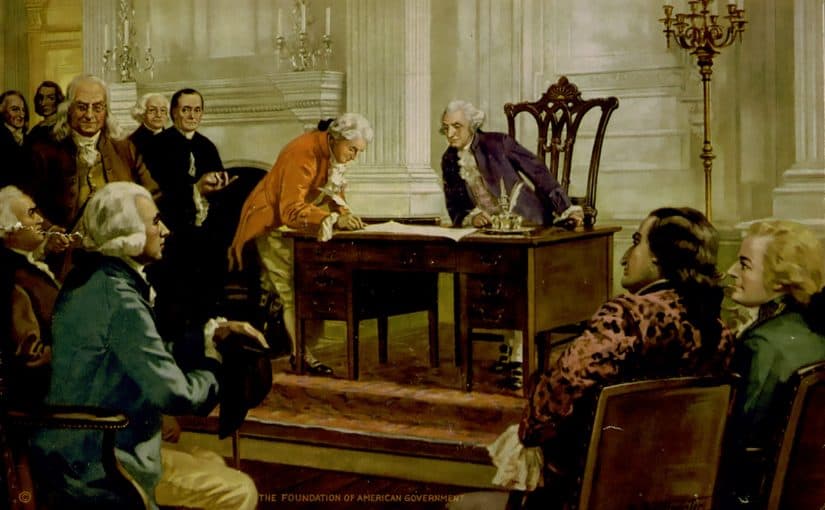
The Founders of the United States of America not only believed that unalienable rights come from God; they also believed this principle was foundational for good government.
Did this make them Christian Nationalists? If so, then the notion that Christian Nationalism is dangerous and a threat to a free society is a lie. And it’s a lie being blatantly promoted by the leftist media.
Consider these quotes, which highlight the convictions and beliefs that undergirded America’s founding.
A reproducible PDF file of this compilation is available here.
Samuel Adams—1722-1803
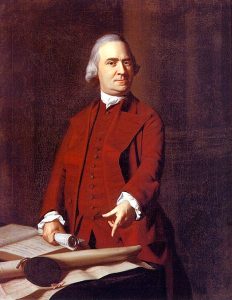
And as it is our duty to extend our wishes to the happiness of the great family of man, I conceive that we cannot better express ourselves than by humbly supplicating the Supreme Ruler of the world that the rod of tyrants may be broken to pieces, and the oppressed made free again; that wars may cease in all the earth, and that the confusions that are and have been among nations may be overruled by promoting and speedily bringing on that holy and happy period when the kingdom of our Lord and Saviour Jesus Christ may be everywhere established, and all people everywhere willingly bow to the sceptre of Him who is Prince of Peace. —Samuel Adams
Robert Treat Paine —1731-1814
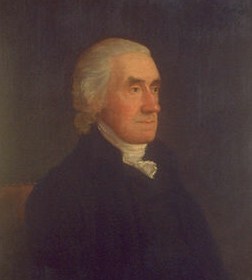
I desire to bless and praise the name of God most high for appointing me my birth in a land of Gospel Light where the glorious tidings of a Saviour and of pardon and salvation through Him have been continually sounding in mine ears. —Robert Treat Paine
George Washington—1732-1799
While we are zealously performing the duties of good citizens and soldiers, we certainly ought not to be inattentive to the higher duties of religion. To the distinguished character of Patriot, it should be our highest glory to add the more distinguished character of Christian. —George Washington
It is the duty of all Nations to acknowledge the providence of Almighty God, to obey his will, to be grateful for his benefits, and humbly to implore his protection and favors. —George Washington
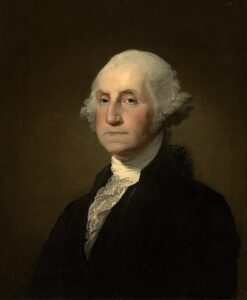
Religion and morality are the essential pillars of civil society. —George Washington
The propitious smiles of Heaven, can never be expected on a nation that disregards the eternal rules of order and right, which Heaven itself has ordained… —George Washington
We have abundant reason to rejoice that in this Land the light of truth and reason has triumphed over the power of bigotry and superstition, and that every person may here worship God according to the dictates of his own heart. In this enlightened Age and in this Land of equal liberty it is our boast, that a man’s religious tenets will not forfeit the protection of the Laws, nor deprive him of the right of attaining and holding the highest Offices that are known in the United States. —George Washington
Where is the security for property, for reputation, for life, if the sense of religious obligation deserts the oaths . . . ? —George Washington
Let us with caution indulge the supposition that morality can be maintained without religion. Reason and experience both forbid us to expect that national morality can prevail in exclusion of religious principle. —George Washington
John Adams—1735-1826
[I]t is religion and morality alone which can establish the principles upon which freedom can securely stand. The only foundation of a free constitution is pure virtue. —John Adams
Suppose a nation in some distant region should take the Bible for their only law book, and every member should regulate his conduct by the precepts there exhibited. What a Utopia! What a paradise this region would be. —John Adams
The Declaration of Independence laid the cornerstone of human government upon the first precepts of Christianity. —John Adams
The moment the idea is admitted into society that property is not as sacred as the laws of God, and that there is not a force of law and public justice to protect it, anarchy and tyranny commence. —John Adams
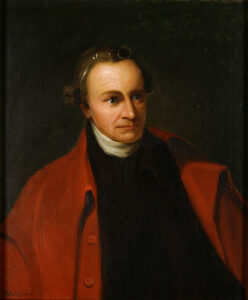
Patrick Henry—1736-1799
It cannot be emphasized too strongly or too often that this great nation was founded, not by religionists, but by Christians; not on religions, but on the gospel of Jesus Christ. For this very reason peoples of other faiths have been afforded asylum, prosperity, and freedom of worship here. —Patrick Henry
John Hancock—1737-1793
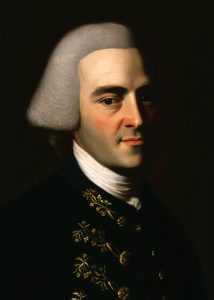
Resistance to tyranny becomes the Christian and social duty of each individual….Continue steadfast and, with a proper sense of your dependence on God, nobly defend those rights which heaven gave, and no man ought to take from us. —John Hancock
Jacob Duché—1737-1798
If spiritual liberty calls upon its pious votaries to extend their views far forward to a glorious hereafter, civil liberty must at least be allowed to secure, in a considerable degree, our well-being here. And I believe it will be no difficult matter to prove, that the latter is as much the gift of God in Christ Jesus as the former, and consequently, that we are bound to stand fast in our civil as well as our spiritual freedom. —Jacob Duché, a clergyman from the colonial era of America who prayed the first prayer in Congress on September 7, 1774, in a sermon titled “The Duty of Standing Fast in Our Liberties,” which he preached on July 7, 1775
Charles Carroll of Carrollton—1737-1832
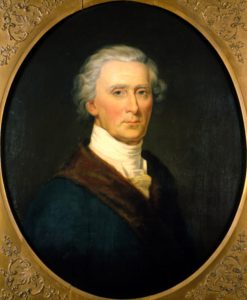
Without morals a republic cannot subsist any length of time; they therefore who are decrying the Christian religion, whose morality is so sublime and pure (and) which insures to the good eternal happiness, are undermining the solid foundation of morals, the best security for the duration of free governments. —Charles Carroll of Carrollton
Thomas Jefferson—1743-1826
God who gave us life gave us liberty. And can the liberties of a nation be thought secure when we have removed their only firm basis, a conviction in the minds of the people that these liberties are of the Gift of God? That they are not to be violated but with His wrath? Indeed, I tremble for my country when I reflect that God is just; that His justice cannot sleep forever…” —Thomas Jefferson
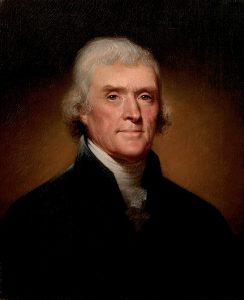
We hold these truths to be self-evident: that all men are created equal; that they are endowed by their Creator with certain unalienable rights; that among these are life, liberty, and the pursuit of happiness. —Thomas Jefferson, affirmed by Jefferson himself and the 55 other signers of the Declaration of Independence
The legitimate powers of government extend to such acts only as are injurious to others. [In other words, government has a short job description; it is to hinder and punish those who seek to thwart their fellow citizens from exercising their inherent rights.] —Thomas Jefferson
Benjamin Rush—1746-1813
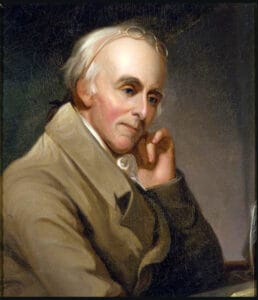
The gospel of Jesus Christ prescribes the wisest rules for just conduct in every situation of life. Happy they who are enabled to obey them in all situations! —Benjamin Rush
The only means of establishing and perpetuating our republican forms of government is the universal education of our youth in the principles of Christianity by means of the Bible. —Benjamin Rush
Without religion, I believe that learning does real mischief to the morals and principles of mankind. —Benjamin Rush
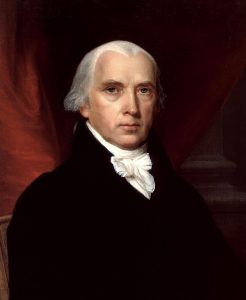
James Madison—1751-1836
Cursed be all that learning that is contrary to the cross of Christ. —James Madison
It is the duty of every man to render to the Creator such homage…Before any man can be considered as a member of Civil Society, he must be considered as a subject of the Governor of the Universe. —James Madison

Gouverneur Morris—1752-1816
[F]or avoiding the extremes of despotism or anarchy . . . the only ground of hope must be on the morals of the people. I believe that religion is the only solid base of morals and that morals are the only possible support of free governments. [T]herefore education should teach the precepts of religion and the duties of man towards God. —Gouverneur Morris
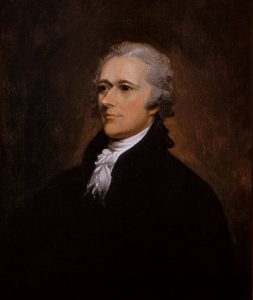
Alexander Hamilton—1757-1804
The Christian Constitutional Society, its object is first: The support of the Christian religion. Second: The support of the United States. —Alexander Hamilton
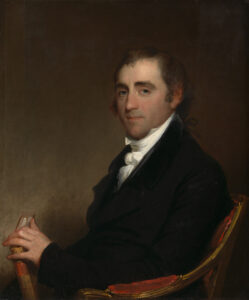
Fisher Ames—1758-1808
[Why] should not the Bible regain the place it once held as a school book? Its morals are pure, its examples captivating and noble. The reverence for the Sacred Book that is thus early impressed lasts long; and probably if not impressed in infancy, never takes firm hold of the mind. —Fisher Ames
Noah Webster—1758-1843
All the miseries and evils which men suffer from vice, crime, ambition, injustice, oppression, slavery and war, proceed from their despising or neglecting the precepts contained in the Bible. —Noah Webster

[T]he Christian religion, in its purity, is the basis, or rather the source of all genuine freedom in government. . . . and I am persuaded that no civil government of a republican form can exist and be durable in which the principles of that religion have not a controlling influence. —Noah Webster
In my view, the Christian religion is the most important and one of the first things in which all children, under a free government ought to be instructed. —Noah Webster
No truth is more evident to my mind than that the Christian religion must be the basis of any government intended to secure the rights and privileges of a free people. —Noah Webster
The moral principles and precepts contained in the Scripture ought to form the basis of all our civil constitutions and laws. —Noah Webster
Jedidiah Morse—1761-1826
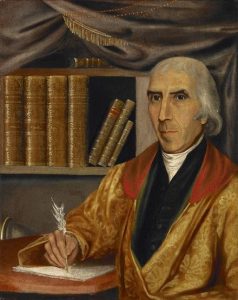
To the Kindly influence of Christianity we owe to that degree of civil freedom, and political and social happiness which mankind now enjoy. In proportion as the genuine effects of Christianity are diminished in any nation, either through unbelief, or the corruption of its doctrines, or the neglect of its institutions: in the same proportion will the people of that nation recede from the blessings of genuine freedom, and approximate the miseries of despotism. I hold this to be a truth confirmed by experience. If so, it follows, that all efforts made to destroy the foundations of our holy religion, ultimately tend to the subversion also of our political freedom and happiness. Whenever the pillars of Christianity shall be overthrown, our present republican forms of government, and all the blessing’s which flow from them, must fall with them. —Jedidiah Morse
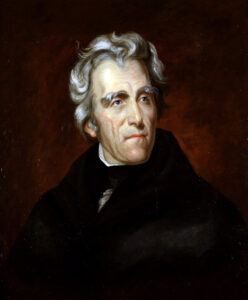
Andrew Jackson—1767-1845
[The Bible] is the rock on which our Republic rests. —Andrew Jackson
John Quincy Adams—1767-1848
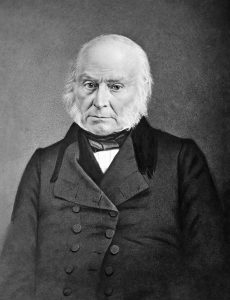
The highest glory of the American Revolution was this: it connected in one indissoluble bond the principles of civil government with the principles of Christianity. —John Quincy Adams
We have no government armed with power capable of contending with human passions unbridled by morality and religion. Our constitution was made for a moral and religious people… it is wholly inadequate to the government of any other. —John Quincy Adams
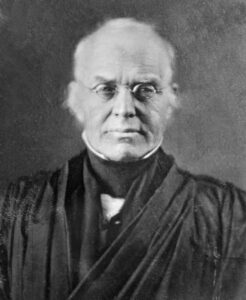
Joseph Story—1779-1845
I verily believe Christianity necessary to the support of civil society. One of the beautiful boasts of our municipal jurisprudence is that Christianity is a part of the Common Law… There never has been a period in which the Common Law did not recognize Christianity as lying its foundations. —Joseph Story
Daniel Webster—1782-1852
Whatever makes men good Christians, makes them good citizens. —Daniel Webster
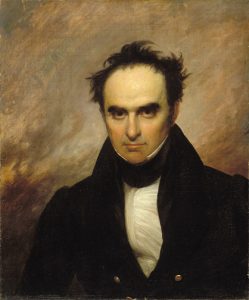
The inherent right in the people to reform their government, I do not deny; and they have another right, and that is to resist unconstitutional laws without overturning the government. —Daniel Webster
If an angel should be winged from Heaven, on an errand of mercy to our country, the first accents that would glow on his lips would be, Beware! Be cautious! You have everything to lose; nothing to gain. We live under the only government that ever existed which was framed by the unrestrained and deliberate consultations of the people. Miracles do not cluster. That which has happened but once in six thousand years cannot be expected to happen often. Such a government, once gone, might leave a void, to be filled, for ages, with revolution and tumult, riot and despotism. —Daniel Webster
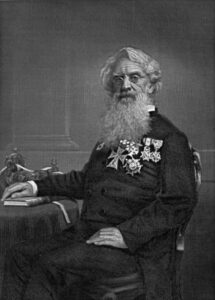
Samuel Morse—1791-1872
Education without religion is in danger of substituting wild theories for the simple commonsense rules of Christianity. —Samuel Morse
David Josiah Brewer—1837-1910
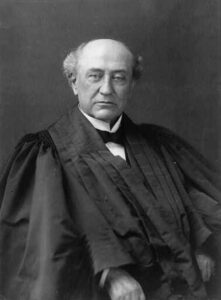
Our laws and our institutions must necessarily be based upon and embody the teachings of the Redeemer of mankind. It is impossible that it should be otherwise, and in this sense and to this extent our civilization and our institutions are emphatically Christian. —David Josiah Brewer
Calvin Coolidge —1872-1933
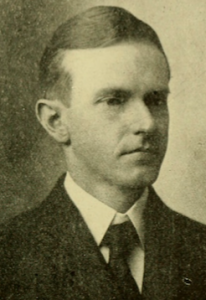
The foundations of our society and our government rest so much on the teachings of the Bible that it would be difficult to support them if faith in these teachings would cease to be practically universal in our country. —Calvin Coolidge
About the Declaration there is a finality that is exceedingly restful. It is often asserted that the world has made a great deal of progress since 1776, that we have had new thoughts and new experiences which have given us a great advance over the people of that day, and that we may therefore very well discard their conclusions for something more modern. But that reasoning can not be applied to this great charter. If all men are created equal, that is final. If they are endowed with inalienable rights, that is final. If governments derive their just powers from the consent of the governed, that is final. No advance, no progress can be made beyond these propositions. If anyone wishes to deny their truth or their soundness, the only direction in which he can proceed historically is not forward, but backward toward the time when there was no equality, no rights of the individual, no rule of the people. Those who wish to proceed in that direction can not lay claim to progress. They are reactionary. Their ideas are not more modern, but more ancient, than those of the Revolutionary fathers. —Calvin Coolidge